Free Community Helpers Worksheets (People Who Help Us): 6 Printables + Teaching Guide
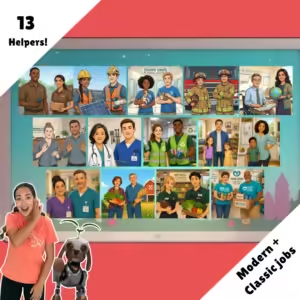
Free, printable community helpers worksheets for ages 5–7: six worksheets, a vocabulary page and a full teaching guide, all as free PDFs with no signup and no email address. Searching for “people who help us worksheets” instead? It’s the very same topic wearing its British name, so you’re in the right place too. Designed for Kindergarten, Grade 1, EYFS, KS1 and Foundation classrooms. Just download, print and teach.
Download the free PDF worksheet pack
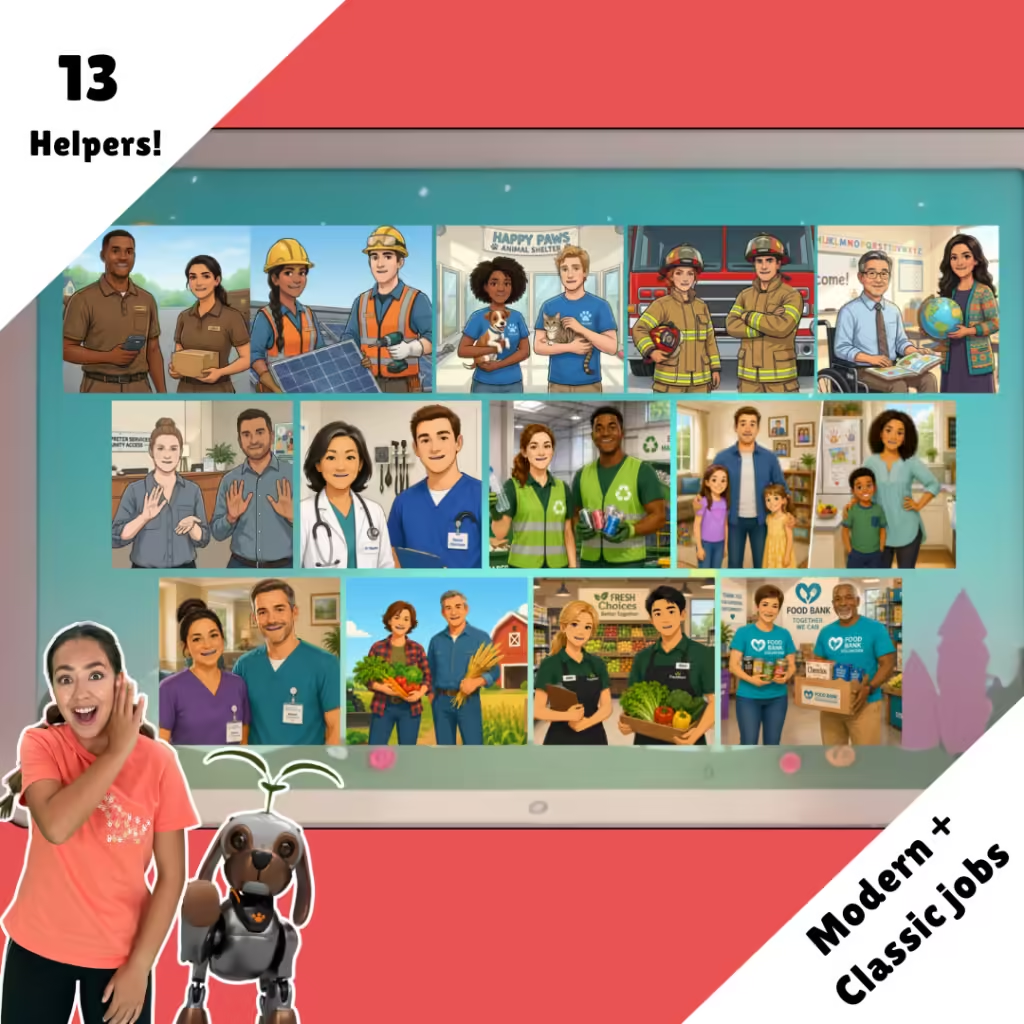
🎬 Even better with the video! These worksheets pair with our Community Helpers video over on Learn With Karyn, where Bobbie the robot dog and Karyn video-call 13 different helpers to find out how each one makes our community better. Watch it together first, then let the worksheets do the reinforcing — or use them completely on their own. They work both ways.
What Are Community Helpers? (And Who Are the People Who Help Us?)
Community helpers are people whose jobs or roles make life better for everyone in a community – keeping us safe, healthy, fed, taught, and cared for. Classic examples include firefighters, doctors, nurses, teachers, farmers, and delivery drivers. Modern classrooms are rightly widening the list to include recycling workers, sign language interpreters, solar panel installers, care home workers, and the parents who care for children full-time. That’s exactly the mix this pack covers.
What’s Included in the Free Worksheet Pack
Inside the pack you’ll find six free printable community helpers worksheets, a curriculum-aligned vocabulary page, and a complete teaching guide with answer guidance and discussion questions. The worksheets follow a deliberate learning sequence: children name the helpers, understand how they help, work out who to call, discover that helpers don’t all wear uniforms, and finally become helpers themselves. Run the pack in order across a week of topic work, or pick the individual sheets that suit your class best.
Jump to a worksheet:
- 1. Who Helps Us? (Parts 1 & 2)
- 2. How Do Helpers Help?
- 3. Who Can Help?
- 4. Everyone Is a Helper!
- 5. I Can Be a Helper Too!
- 6. What Did I Learn?
Worksheet 1: Who Helps Us? (Matching, Parts 1 & 2)
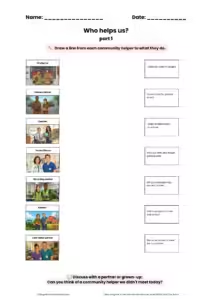
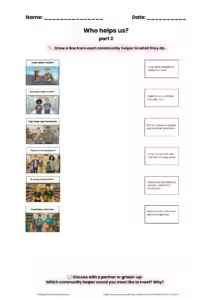
Two pages of matching to open the pack. Children draw a line from each helper to a short description of what they do. Thirteen helpers across the two pages, with Part 1 mixing familiar faces like the firefighter and teacher among newer ones, and Part 2 devoted to helpers children rarely meet on paper: the solar panel installer, the sign language interpreter, the stay-at-home parent. The descriptions are shuffled so every line takes real thinking – and for pre-readers, an adult simply reads each description aloud while the child draws the line.
Activity type: Matching (2 pages)
Curriculum link: Naming community helpers and describing what they do
Download this worksheet in the free PDF pack
Worksheet 2: How Do Helpers Help? (Sorting)
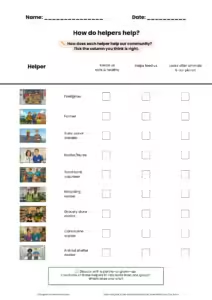
Nine helpers sorted into three groups – who keeps us safe and healthy, who helps feed us, and who looks after animals and our planet – with three helpers belonging to each, so no group can swallow another. Then comes the question that does the real teaching: were any helpers hard to sort? Some genuinely straddle groups (a care home worker keeps people healthy and cares for them), and a child who notices that is doing exactly the interdependence thinking this topic is after.
Activity type: Categorisation and reflection
Curriculum link: How different helpers contribute to community life
Download this worksheet in the free PDF pack
Worksheet 3: Who Can Help? (Scenarios)
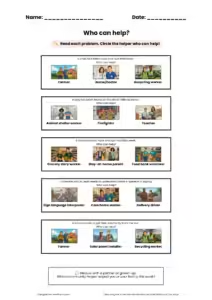
Five illustrated problems, three helpers to choose from each time, one right answer to circle. It opens with a confidence builder every child can get – a child has fallen and hurt their knee, so who helps? – then moves through scenarios that spotlight the pack’s less common helpers: the found dog with no owner, the family without enough food this week, the Deaf audience member who needs to understand a speaker, the family who wants their electricity from the sun. The wrong options are deliberately plausible, so a right answer means real understanding, not lucky guessing.
Activity type: Scenario problem-solving
Curriculum link: Matching helpers to situations where they’re needed
Download this worksheet in the free PDF pack
Worksheet 4: Everyone Is a Helper! (True or False)
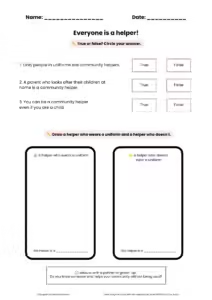
The perspective-widener, and the worksheet that makes this pack different from every other community helpers resource. True-or-false statements gently take apart the idea that helpers only wear uniforms: children establish that a parent who looks after children at home is a community helper, and that children can be helpers too. A drawing activity then makes it personal.
Activity type: True/false and drawing
Curriculum link: Recognising unpaid, informal, and everyday helpers
Download this worksheet in the free PDF pack
Worksheet 5: I Can Be a Helper Too! (Star Tracker)
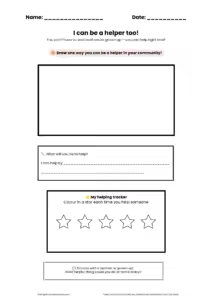
The action step. Children draw and write ways they can help in their own community, then record real acts of helping on an open star tracker – no day labels, no fixed number of stars, no pressure. The tracker fills at whatever pace real helping happens, which means it works for every child. This is where the topic turns from something children learned about into something they do.
Activity type: Draw, write, and star tracker
Curriculum link: Taking part as an active member of the community
Download this worksheet in the free PDF pack
Worksheet 6: What Did I Learn? (Wrap-Up)
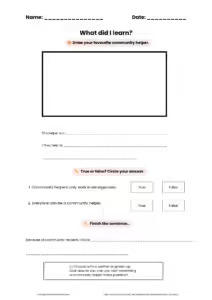
A gentle wrap-up rather than a test. Children draw their favourite helper, answer true-or-false questions, and complete the sentence “Because of community helpers, I have ___.” It shows you exactly what stuck — and it ends the pack where it should end: on gratitude.
Activity type: Consolidation – drawing, true/false, and sentence completion
Curriculum link: Reviewing and expressing learning
Download this worksheet in the free PDF pack
Meet the 13 Community Helpers in the Video
The companion video introduces thirteen helpers through a friendly video-call format. Alongside much-loved classics — firefighters, teachers, doctors and nurses, farmers, delivery drivers, grocery store workers and food bank volunteers — children also meet some modern community helpers that most resources leave out: a solar panel installer, a sign language interpreter, animal shelter workers, recycling workers, stay-at-home parents and care home workers.
That mix is deliberate. Children deserve to see the full breadth of who keeps a community going, including the jobs that rarely appear in early years topic packs. If you’ve been searching for community helpers teaching resources that go beyond the usual six faces, this pack and video were made for you.
How to Use These Worksheets
In the Classroom
Watch the video together as your topic introduction, then work through the worksheets in order – they’re sequenced from naming helpers to becoming one, and each fits comfortably in a 15–20 minute activity slot, so one or two per session across the week works beautifully. Each worksheet’s page in the teaching guide even gives you an opening question to introduce it. And when the pack is finished, celebrate: every child who completes it is already a community helper.
At Home
These make screen time count for something. Watch the video together, then pick one worksheet as a follow-up — the Who Can Help? scenarios are a favourite at the kitchen table. No printer-perfect setup required; the drawing and talking matter more than the paper.
For Homeschooling
Because the pack is aligned to curricula in four countries, homeschooling families can slot it straight into a social studies unit with almost no prep. Pair it with a walk around your own neighbourhood to spot real helpers at work, and you have a complete mini-unit.
Curriculum Alignment (UK, US, Canada & Australia)
Every worksheet in this pack was written against the curriculum documents themselves, not just around the theme:
United Kingdom: Supports the People Who Help Us topic in EYFS (Understanding the World: People, Culture and Communities) and the PSHE Association’s KS1 programme on jobs and people who work in the community, extending naturally into Year 1.
United States: Aligned with Kindergarten and Grade 1 social studies — including the C3 Framework‘s civics strand and Texas TEKS outcomes on jobs in the home, school, and community.
Canada: Fits kindergarten social studies outcomes on the people who help and care for us at home, at school, and in the community, including British Columbia’s social studies curriculum.
Australia: Supports Foundation (Prep) HASS in Version 9 of the Australian Curriculum — exploring the places we belong and the people in them.
If you teach in one of these systems, the pack should feel like it was written for your classroom — because it was.
The Free Teaching Guide, Vocabulary Page & Answer Guidance
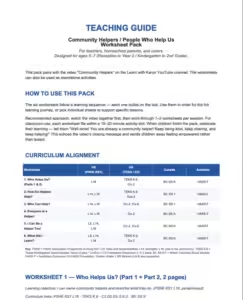
Get the free My Community Helpers teaching guide.
Every worksheet gets its own page in the teaching guide: a learning objective, curriculum references from the frameworks above, a suggested way to introduce the activity, answer guidance, a discussion question, and a practical tip. The answers live inside each worksheet’s section – not on a back page – because a teacher checking work mid-lesson, or a parent sitting beside their child at the kitchen table, needs them right there.
There’s also a vocabulary page covering eight key terms drawn from the curricula themselves, with volunteer and emergency included as stretch words for confident learners. And when a child finishes the whole pack, the guide hands you the closing line: tell them they are already a community helper — and to keep being kind, keep sharing, and keep helping.
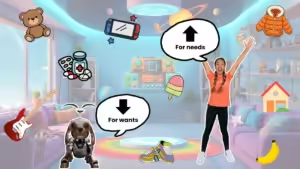
Looking for more? If your class has loved meeting the people who keep a community running, our Needs and Wants unit is the natural next topic – where money comes from, and how we choose between the things we need and the things we want. You’ll find our free needs and wants worksheets in the same format, with the same four-country curriculum alignment, plus a Needs and Wants video lesson where Karyn gets her first ever job, and wants to spend ALL her money. Completely free, just like this pack.
Frequently Asked Questions
Are these community helpers worksheets really free?
Yes, completely. No signup, no email address, no payment details. Click the download button and the PDFs are yours to print for your classroom or home. Our free resources are funded by our YouTube channel, so watching and sharing the video is the nicest thank-you there is.
What ages and grades are these worksheets for?
They’re written for children ages 5-7: Kindergarten and Grade 1 in the US and Canada, EYFS through Year 1 (KS1) in the UK, and Foundation or Prep in Australia. Confident preschoolers and Pre-K children can enjoy them too with a little adult support, as can children slightly older.
Can I use the worksheets without the video?
Absolutely. Every worksheet stands on its own. The video adds context and characters children love, but nothing in the pack requires it.
What’s the difference between community helpers and people who help us?
Nothing except the name – “community helpers” is the US and Canadian term, and “People Who Help Us” is the UK name for the very same unit of learning. This pack is written to serve both.
What are the 10 community helpers?
There’s no official list of 10 community helpers, but the ones most commonly taught are doctors, nurses, teachers, firefighters, police officers, farmers, postal workers, dentists, librarians, and paramedics. Our video goes further with 13 helpers, including several that rarely appear in classroom resources.
How do I teach community helpers to kindergarten or EYFS?
Start with what children already know: who have they seen helping in their own street? Watch the video together, then follow the pack’s sequence of matching, sorting, and scenario activities, and finish with something expressive like the star tracker or a drawing. Guest visitors and neighbourhood walks make the topic unforgettable.
Do the worksheets match my curriculum?
The pack is curriculum-aligned for the UK (EYFS and KS1), the US (Kindergarten and Grade 1 social studies), Canada (kindergarten social studies), and Australia (Foundation/Prep HASS). Every worksheet’s page in the teaching guide lists its curriculum references, so you can evidence the alignment in your planning.
Help Us Keep These Resources Free
Everything on this site is free because our YouTube channel makes it possible. If these worksheets help your class or your child, the best way to say thanks costs nothing: watch the Community Helpers video, subscribe to Learn with Karyn, and share this page with a teacher friend who’s planning this topic. Every view keeps the printables flowing.
And when it’s time to wind down after topic work, our sister channel Storytime with Karyn brings beautiful children’s books to life as calm, gentle animated read-alouds – made for story corners, quiet time, and the end of a busy day. Plus we have free English comprehension worksheets to pair with each of our read along videos over on our free kids bookclub.
Download the free worksheet pack for My Community Helpers.