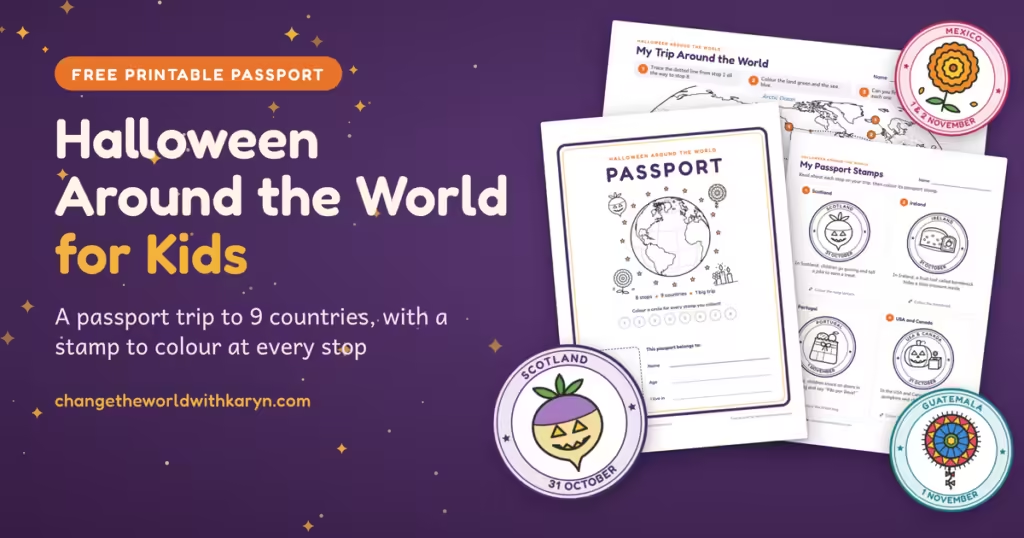
Long before anyone carved a pumpkin, children in Scotland and Ireland were hollowing out turnips. They scooped out the hard insides, cut a face into the skin and popped a candle inside to make a glowing lantern. It is a lovely surprise for little ones, and the perfect first stop on a trip around the world.
This guide to Halloween around the world for kids takes children aged 4 to 8 on a passport trip to nine countries, from guising in Scotland to giant kites in Guatemala. Along the way, they discover that not every celebration at this time of year is Halloween. Some are special days for remembering people we love, with flowers, candles and favourite foods. Others look a lot like trick-or-treating, with a twist.
Everything here is free: the guide, the printable passport and the read-alouds that go with it. No sign-up, no email gate, no paywall.
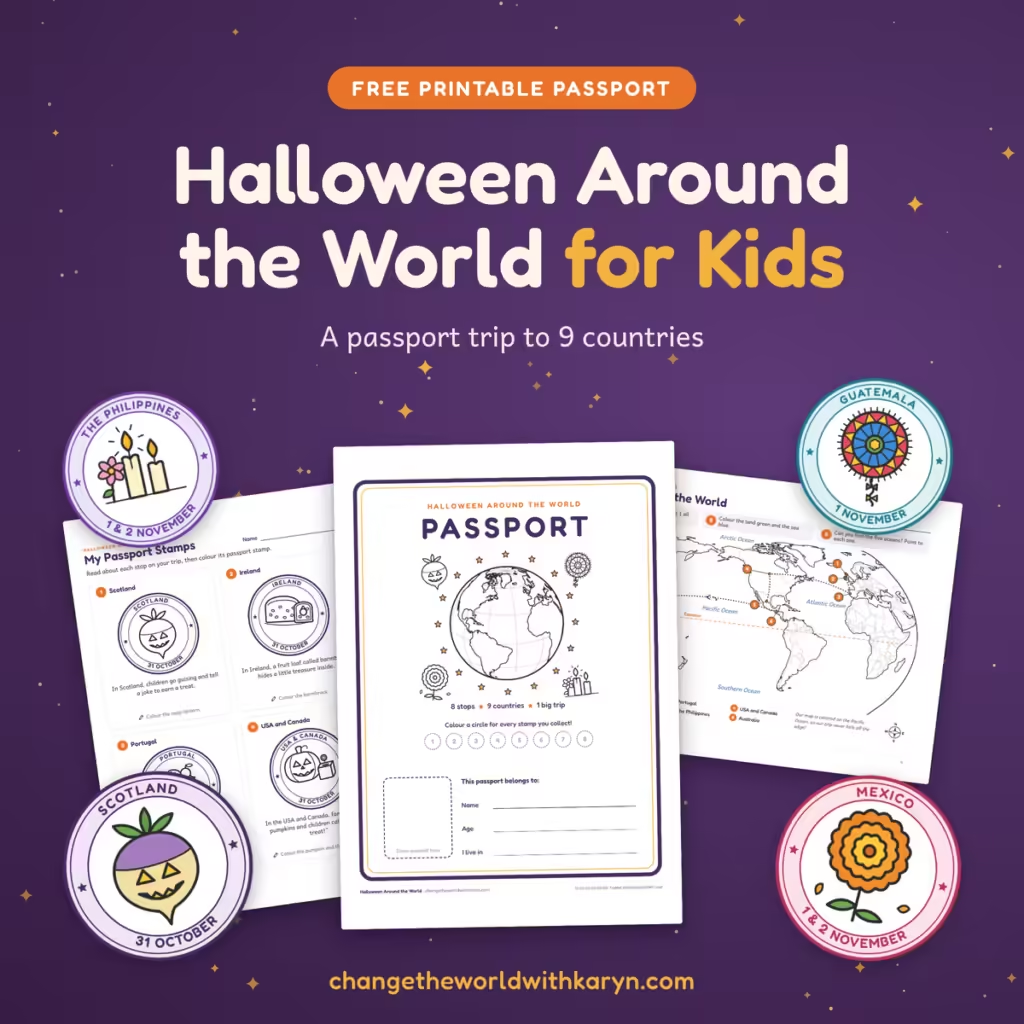
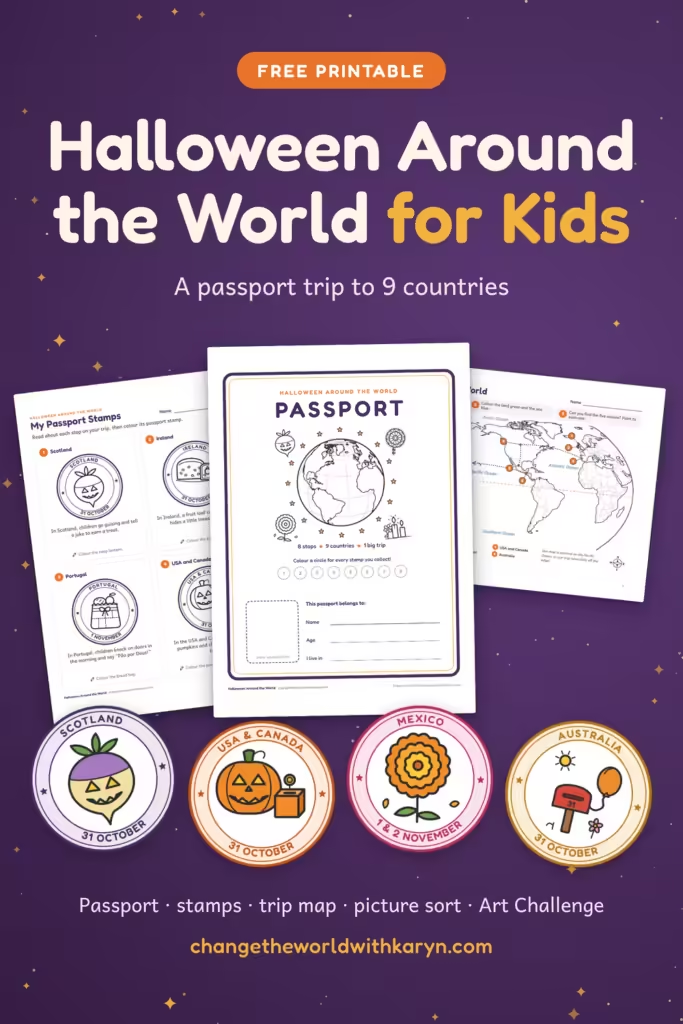
Your Free Halloween Around the World Passport
Every good trip needs a passport. Our free printable Halloween Around the World passport lets children collect a stamp at each stop as you read this guide together. It works just as well in the classroom as it does at the kitchen table.
Inside the pack:
- A passport cover for children to name, decorate and make their own.
- Two stamp pages, with a stamp to colour for every stop and a one-line fact to read under each.
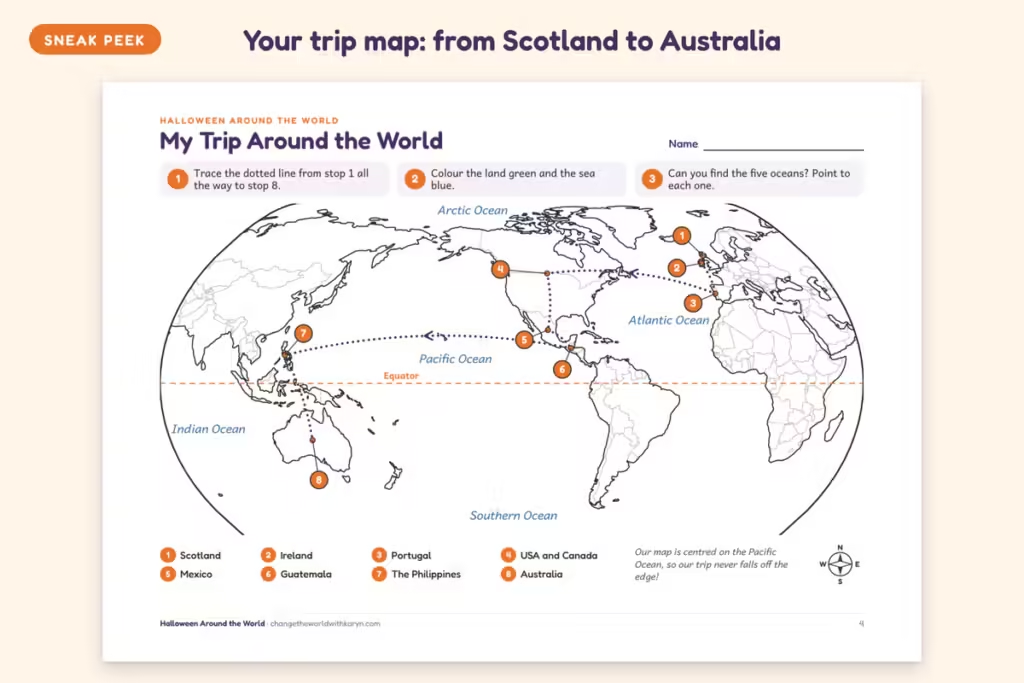
- A trip map to colour, with a dotted line to follow from Scotland all the way to Australia.
- A same-and-different sort with picture cards to cut out, so children can spot what the celebrations have in common.
- An Art Challenge: design your own Halloween lantern, plus a chance to talk about the special days your own family celebrates.
- A short teaching guide with answers, a vocabulary list, lesson ideas and curriculum links for the UK, US, Canada and Australia.
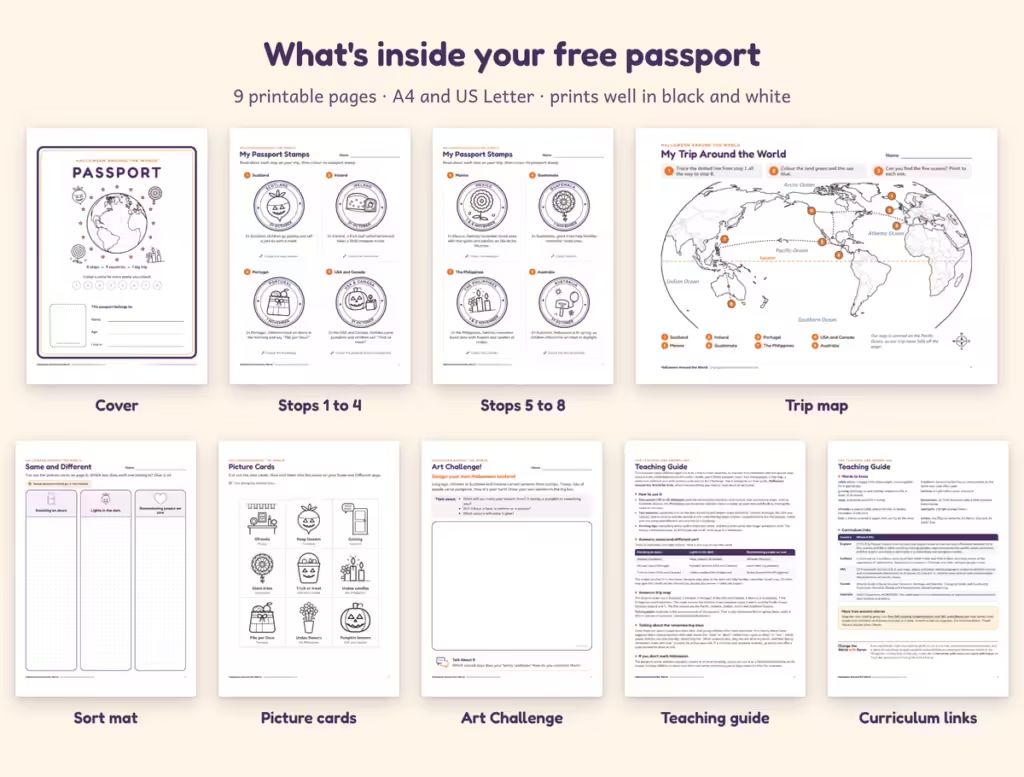
Download the free Halloween Around the World passport: A4 PDF (UK, Ireland, Australia and most other countries) or US Letter PDF (USA and Canada). It’s nine pages, and everything prints well in black and white.
For a cosy, not-scary witch story to go with the trip, watch our gentle read-aloud of Grandma Gets an Upgrade, where Grandma Witch and her granddaughter Wren test everything from jet packs to submarines in search of a new broom.
Where Did Halloween Begin?
Halloween began as Samhain, an old Gaelic festival in Scotland and Ireland that marked the end of the harvest and the start of winter. In Scottish Gaelic, Halloween is still called Oidhche Shamhna, and in Irish it is Oíche Shamhna: the night of Samhain.
Long ago, people believed this was the night when fairies and spirits could slip into our world. So they lit bonfires and lanterns, and wore disguises to keep mischievous spirits away. The name Halloween comes from All Hallows’ Eve, the evening before All Saints’ Day on 1 November.
In the 1800s, many families from Scotland and Ireland moved to North America and took their customs with them. Turnip lanterns became pumpkin lanterns, guising grew into trick-or-treating, and Halloween slowly travelled back around the world. Today, Halloween in different countries sits alongside lots of other celebrations at the same time of year, as our passport trip shows.
The Passport Trip: Halloween Around the World for Kids
So how is Halloween celebrated around the world? Grab your passport and a pencil. We travel across Europe, over the Atlantic, down through Mexico and Central America, and on to the Philippines and Australia.
1. Scotland: Guising and Neep Lanterns
In Scotland, trick-or-treating has its own name: guising, from the word “disguise”. Children dress up and knock on neighbours’ doors, and traditionally they earn their treat by telling a joke. Historic Environment Scotland calls guising the original form of trick-or-treating.
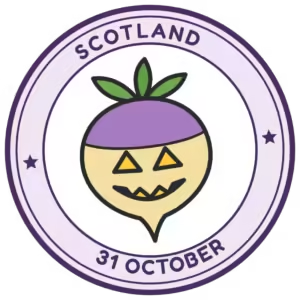
Scottish families once carved their lanterns from turnips, known as neeps or tumshies. They hollowed them out, cut a face into the skin and placed a candle inside, so the glowing face could be seen from far away and scare off fairies and ghosts. At Halloween parties, children still go dooking for apples, trying to catch apples floating in a basin of water using only their teeth.
Did you know? Turnips are much tougher than pumpkins, so carving a neep lantern takes a lot of scooping and a lot of patience.
Passport stamp: colour the neep lantern.
2. Ireland: Barmbrack and Turnip Lanterns
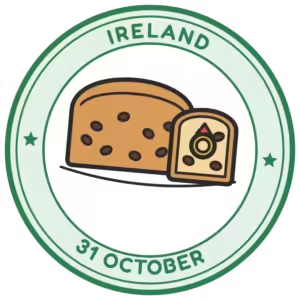
In Ireland, Halloween is Oíche Shamhna, and families share a fruit loaf called barmbrack. Its name comes from the Irish bairín breac, meaning “speckled loaf”, because it is speckled with dried fruit. A little treasure, often a ring, is baked inside, and long ago people said the treasure in your slice could tell your future.
Irish families carved turnip lanterns too. Long ago, some carried a burning piece of turf home from a special fire inside a hollowed-out turnip, to light a new fire and bring good luck for the year ahead. When Irish families settled in America in the 1800s, pumpkins were easier to find, and the pumpkin lantern was born.
Did you know? The jack-o’-lantern you see on doorsteps today started life as an Irish turnip.
Passport stamp: colour the barmbrack.
Bonus stop: the Isle of Man
On the Isle of Man, 31 October is Hop-tu-Naa, the old Celtic New Year’s Eve. Children scoop out turnip lanterns with a spoon, and groups go from house to house singing Hop-tu-Naa songs. One much-loved song is about Jinny the Witch.
3. Portugal: Pão por Deus
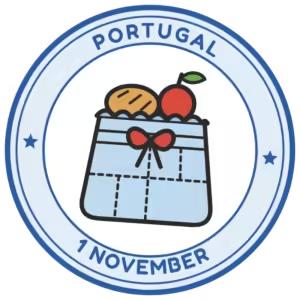
In Portugal, the door knocking happens in the morning. On 1 November, All Saints’ Day, children visit neighbours in little groups, carrying cloth bags and calling out Pão por Deus! The words mean “bread for God’s sake”. Neighbours fill their bags with sweet breads, apples, pomegranates, walnuts and chestnuts, and these days some sweets and chocolates too. In some places the custom is called Bolinho, which means “little cake”.
There are no costumes and no masks. Pão por Deus is all about neighbours sharing what they have.
Did you know? Children only go out for Pão por Deus in the morning, so it is all over by lunchtime.
Passport stamp: colour the bread bag.
4. The USA and Canada: Pumpkins, Trick-or-Treat and the Orange Box
Halloween crossed the Atlantic with Scottish and Irish families in the mid-1800s, and North America made it famous. Children dress up, carry a bag or bucket from door to door and call out “Trick or treat!”, while pumpkin lanterns grin from the doorsteps.
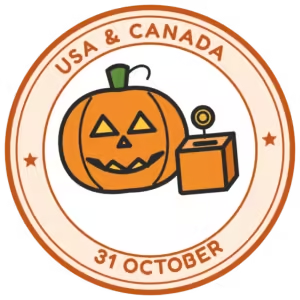
Canada has its own special chapter. From 1955 to 2006, many Canadian children carried a small orange UNICEF box while trick-or-treating, collecting coins to help children in other countries. Plenty of Canadian grown-ups still remember their orange boxes fondly.
Look out for teal pumpkins, too. A teal pumpkin on the doorstep means the family has non-food treats, like glow sticks or small toys, so children with food allergies can join in safely. The idea comes from the Teal Pumpkin Project, run by the US charity Food Allergy Research & Education (FARE).
To help little ones understand why some friends can’t eat certain foods, watch What Do My Friends Eat? on our Learn with Karyn channel. Karyn is planning a party, and Bobbie the robot dog helps her work out what each of her friends can eat, from Sam, who has a nut allergy, to Maya, who is vegan. Then try the free food allergy worksheets that go with it: a Safe Food Matching Game, where children sort food cards for all six friends; a Party Planning Plate, where they design a party menu with something safe for everyone; and a Food Detective Maze, where they help the friends find their way to safe food.
Did you know? Trick-or-treating grew from Scottish guising, so every “Trick or treat!” has a little bit of Scotland in it.
Passport stamp: colour the pumpkin and the orange box.
Bonus stop: England
In parts of northern and western England, people once went souling. From at least the 1500s, they went door to door around All Souls’ Day on 2 November, singing in return for small cakes called soul cakes. By around 1800, children were going souling too, which makes it one of the early ancestors of trick-or-treating.
5. Mexico: Día de los Muertos
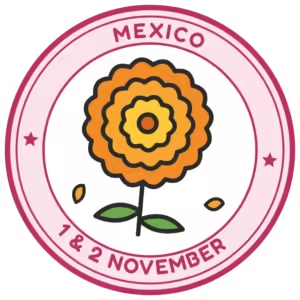
Mexico’s best-known celebration at this time of year is not Halloween at all. Día de los Muertos, the Day of the Dead, takes place on 1 and 2 November. It is a joyful time for families to remember people they love who have died. The first day is for remembering children, and the second is for adults.
Families build an ofrenda, a special table or altar at home, and fill it with photos of their loved ones, candles, their favourite foods and drinks, and small treasures they enjoyed. Bright orange marigolds called cempasúchil are everywhere, and their colour and scent are said to help guide loved ones home. Families also visit cemeteries to tidy and decorate graves, share food and tell stories, and bakeries sell a sweet bread called pan de muerto.
In 2008, UNESCO added Mexico’s Indigenous festivity dedicated to the dead to its list of the world’s intangible cultural heritage. Because Día de los Muertos is about real families and the people they miss, it is best explored through the ofrenda, the marigolds and the stories, rather than as a dress-up theme.
Did you know? Some families scatter a path of marigold petals to lead loved ones home. Children who have seen the film Coco may recognise it.
Passport stamp: colour the marigold.
6. Guatemala: The Giant Kites
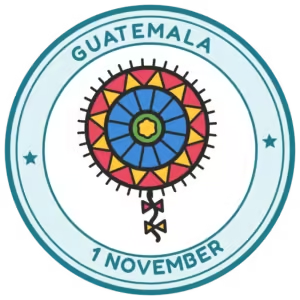
On 1 November, All Saints’ Day, the towns of Sumpango and Santiago Sacatepéquez in Guatemala hold festivals of barriletes gigantes: giant kites. Each one is built by hand from bamboo, rope and tissue paper cut into detailed patterns, and takes months to plan and make. The biggest are up to 20 metres across, almost as long as two buses parked end to end.
Most of the giant kites are built to stand on huge wooden posts rather than fly, while smaller kites fly in the afternoon. For families, the kites are a way of feeling close to loved ones who have died, carrying prayers, messages and love up into the sky.
Did you know? Many kites carry messages in their designs, about caring for nature and celebrating Guatemala’s Indigenous Maya heritage.
Passport stamp: colour the kite.
7. The Philippines: Undas and Pangangaluluwa
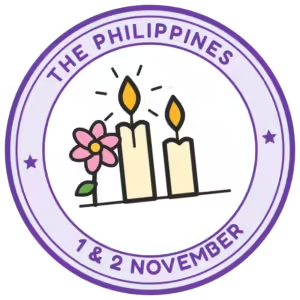
In the Philippines, 1 and 2 November are Undas, the Filipino name for All Saints’ Day and All Souls’ Day. Families travel to cemeteries to visit the graves of loved ones, bringing flowers and candles. They pray and share food together, and the day often becomes a big family reunion.
Long ago, on the night before All Saints’ Day, there was another custom called pangangaluluwa, from the Filipino word for soul. Mostly in Tagalog-speaking areas, groups went from house to house singing, pretending to be souls asking for prayers, and households thanked them with kakanin, or rice cakes. It is a Filipino cousin of Scottish guising. Today the custom has mostly faded, although the town of Sariaya in Quezon has brought it back as a yearly event.
Did you know? Filipinos use the one word, Undas, for both All Saints’ Day and All Souls’ Day, so the celebration lasts two days.
Passport stamp: colour the candles.
8. Australia: Halloween in Spring
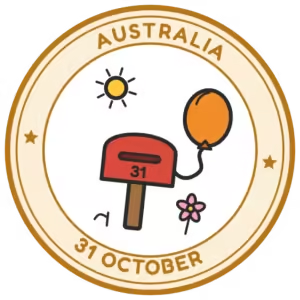
In Australia, Halloween arrives in spring, so there are lighter evenings and spring flowers instead of autumn leaves. Trick-or-treating often happens in daylight, and some people sit outside their homes to chat as children come by. In some neighbourhoods, families tie an orange balloon to their letterbox to show that trick-or-treaters are welcome.
Halloween came to Australia with Irish families long ago, but it has grown much bigger in recent years. In 2024, around one in five Australians planned to celebrate, according to the Australian Retailers Association.
Did you know? The seasons are flipped on the other side of the world, so Australian children trick-or-treat in spring sunshine while children in Scotland are wrapping up for winter.
Passport stamp: colour the orange balloon.
What Do These Celebrations Share?
Look closely at these Halloween traditions around the world and the same three ideas keep popping up. Spotting them helps children see similarities and differences, which is exactly what the same-and-different sort in the passport pack asks them to do.
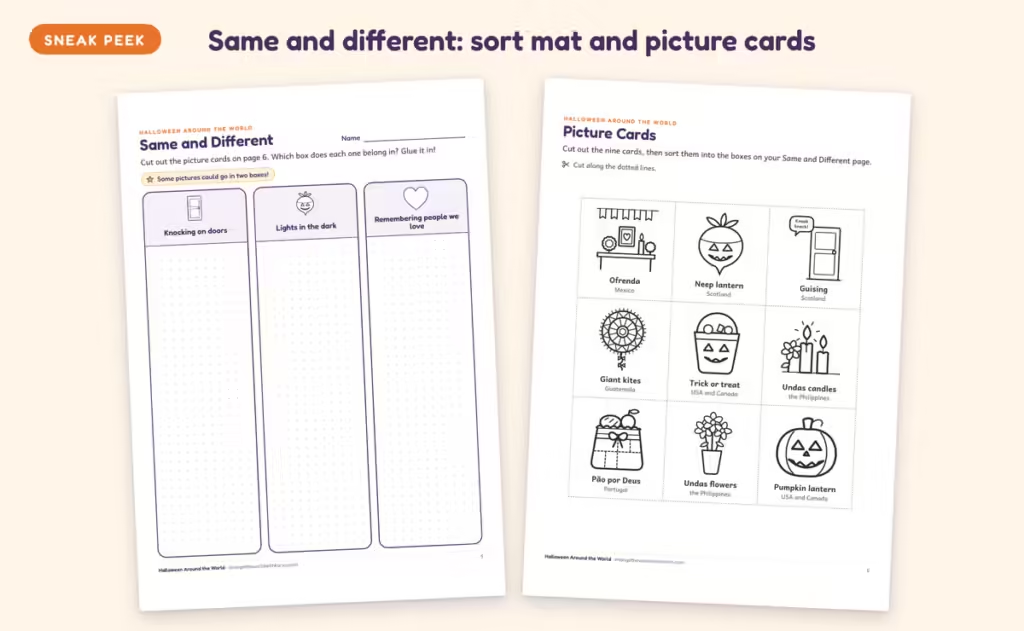
- Knocking on doors. Guising in Scotland, Hop-tu-Naa singing on the Isle of Man, Pão por Deus in Portugal, souling in England, pangangaluluwa in the Philippines and trick-or-treating in North America and Australia. Often the visitor gives something back, like a joke or a song.
- Lights in the dark. Turnip lanterns, pumpkin lanterns and candles on ofrendas and graves, glowing as the nights grow longer in the north.
- Remembering people we love. Día de los Muertos, the giant kites of Guatemala, Undas and All Souls’ Day are all gentle ways of keeping loved ones close.
Ask children which of these ideas they can spot in their own family’s special days, whatever they celebrate.
Talking With Little Ones About the Remembering Days
Some of the celebrations on this trip are about people who have died, and young children often have questions. That is a good thing. Short, simple and honest answers work best.
The end-of-life charity Marie Curie suggests using clear words like “died” or “dead” rather than phrases like “gone to sleep” or “lost”, which young children can take literally. Something like “When someone dies, they are not alive any more, and their family remembers them with love” is plenty for a four-year-old. Expect the same question more than once, and follow the child’s lead.
If a child has lost someone recently, these stops may bring up big feelings. Go gently, keep the focus on love and remembering, and offer a quiet moment to draw or talk.
Teaching Halloween Around the World
With the passport, Halloween around the world for kids is easy to fit into a busy week, in the classroom or at home.
- One session (30 to 45 minutes): read the introduction together, then choose four contrasting stops, such as Scotland, Mexico, the Philippines and Australia. Children colour a stamp at each stop and finish by tracing the route on the map.
- Two sessions: spend the first on the door-knocking and lantern stops (Scotland, Ireland, Portugal, North America and Australia) and the second on the remembering stops (Mexico, Guatemala and the Philippines), finishing with the same-and-different sort and the lantern Art Challenge.
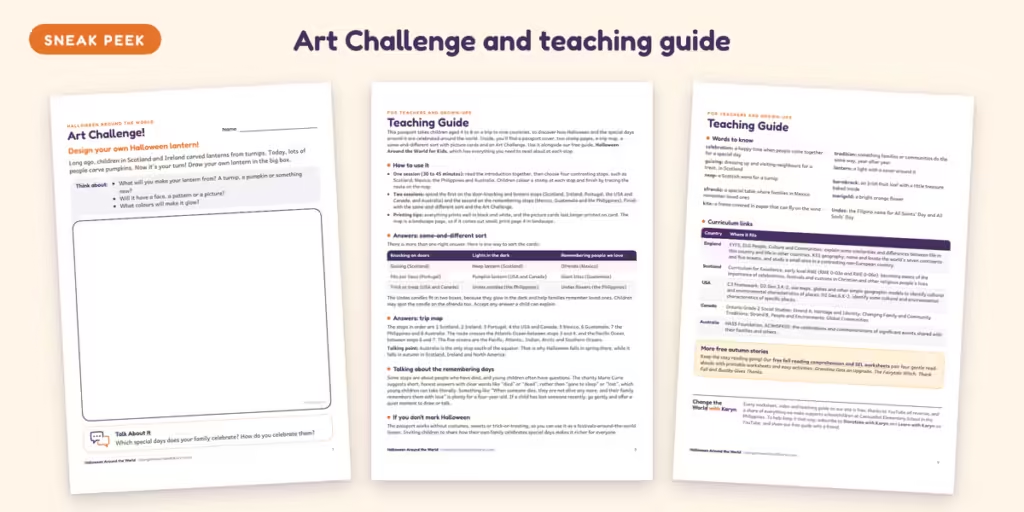
The topic fits the curriculum in all four countries. In England, it supports the Early Learning Goal for People, Culture and Communities, which asks children to explain similarities and differences between life in this country and life in other countries, and the KS1 geography focus on a contrasting non-European country. In Scotland, it links to the early level RME outcomes on the importance of celebrations, festivals and customs (RME 0-03a and 0-06a). In the US, it supports the C3 Framework standard D2.Geo.6.K-2 on the cultural characteristics of specific places. In Ontario, it fits the Grade 2 Heritage and Identity strand on changing family and community traditions, and in Australia it matches the Foundation HASS content description on celebrations and commemorations shared with families and others (AC9HSFK02).
A note for schools and families who don’t mark Halloween: the passport works without costumes, sweets or trick-or-treating, so you can use it as a festivals-around-the-world lesson. Inviting children to share how their own family celebrates special days makes it richer for everyone.
Help Keep These Resources Free
Here’s the honest part. Every worksheet, video and teaching guide on this site is free because YouTube ad revenue pays for it, and a share of everything we make goes to support schoolchildren at Cansumbol Elementary School in the Philippines. So when you watch, it genuinely helps.
If this trip around the world has been useful, the kindest thing you can do is subscribe to Storytime with Karyn and Learn with Karyn on YouTube, and share this page with one teacher or parent who would enjoy it. Thank you. 💛
Find Out More: Free Resources We Love
- Historic Environment Scotland’s guide to Scottish Halloween traditions has wonderful old photos of children lighting turnip lanterns and dooking for apples.
- Culture Vannin’s free Hop-tu-Naa activity resource is packed with songs, turnip-carving ideas, colouring pages and the story of the real Jinny the Witch.
- For grown-ups who would like to read more about Día de los Muertos, UNESCO’s page on the Indigenous festivity dedicated to the dead explains why it matters so much.
Frequently Asked Questions
Where did Halloween start?
Halloween grew out of Samhain, an old Gaelic festival in Scotland and Ireland that marked the end of the harvest and the start of winter. Families who moved from Scotland and Ireland to North America in the 1800s took their customs with them, and Halloween spread around the world from there.
What is guising?
Guising is the Scottish name for going door to door in costume at Halloween. The word comes from “disguise”. Traditionally, guisers earn their treat by telling a joke, and guising is the original form of trick-or-treating.
Is Day of the Dead the same as Halloween?
No. Día de los Muertos is a separate Mexican celebration on 1 and 2 November, with Indigenous roots. Families remember loved ones who have died by building ofrendas with photos, candles, favourite foods and marigolds, and by visiting cemeteries. It falls at the same time of year as Halloween, but it has its own history and meaning.
Why do we carve pumpkins at Halloween?
Before pumpkins, people in Scotland and Ireland carved lanterns from turnips, with a candle inside to light the dark and scare away mischievous spirits. When families settled in North America in the 1800s, pumpkins were easier to find, and the pumpkin jack-o’-lantern was born.
Do they celebrate Halloween in Australia?
Yes, and it has grown in recent years. Halloween falls in spring in Australia, so trick-or-treating often happens in daylight, and some neighbourhoods tie orange balloons to letterboxes to welcome trick-or-treaters. Around one in five Australians planned to celebrate in 2024.
How can I teach Halloween around the world in Reception or kindergarten?
Keep it hands-on and short. Choose three or four contrasting stops, read a little about each and let children colour a passport stamp as they go. Finish by finding the countries on a map and talking about what is the same and what is different. That links directly to the EYFS Early Learning Goal for People, Culture and Communities in England and to the C3 Framework in the US. Our free passport pack has everything you need.
You Might Also Enjoy
Free Stories for Halloween and Autumn
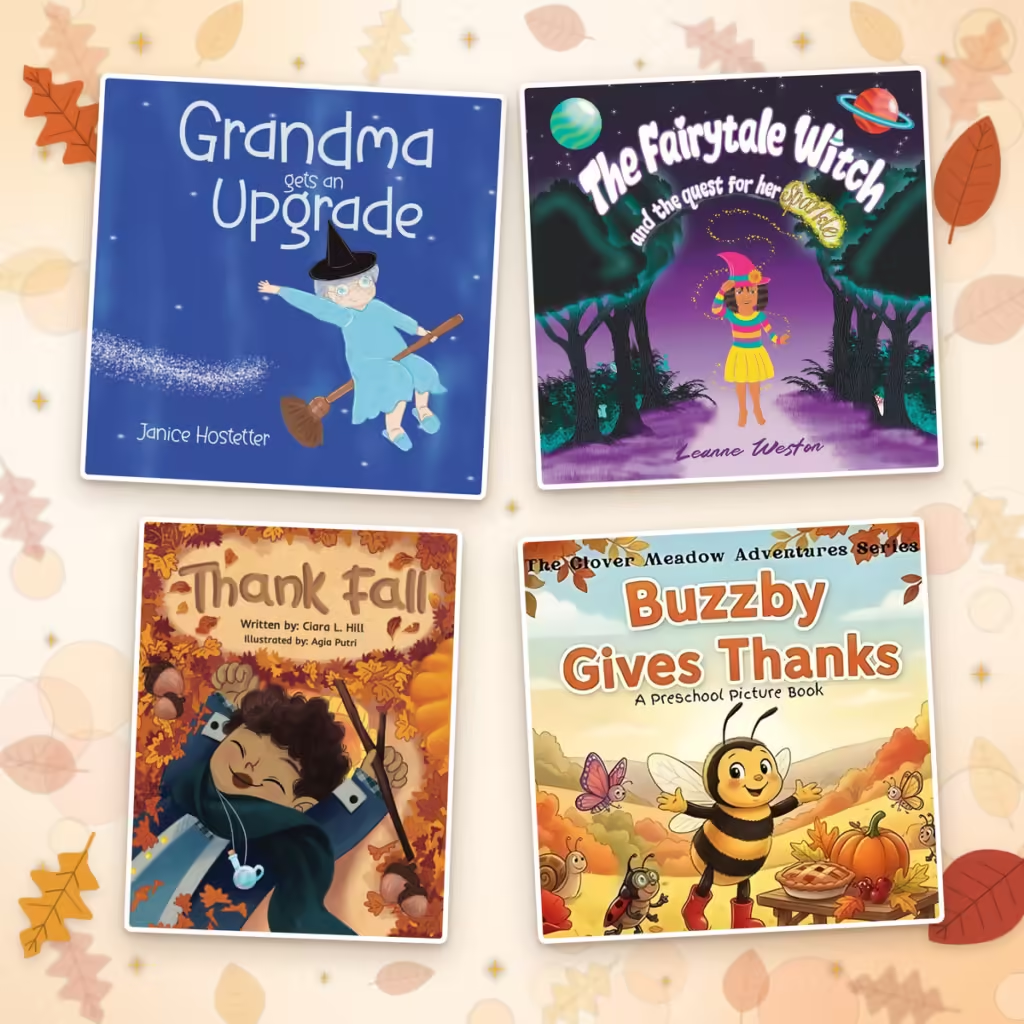
Finished your trip around the world? Keep the cosy autumn feeling going with our free fall reading comprehension and SEL worksheets. They pair four calm read-alouds from our sister channel, Storytime with Karyn, with free printable worksheets: Grandma Gets an Upgrade and The Fairytale Witch and the Quest for Her Sparkle, two gentle, not-scary witch stories, plus Thank Fall and Buzzby Gives Thanks.
Our Halloween Flipbook Notebooks
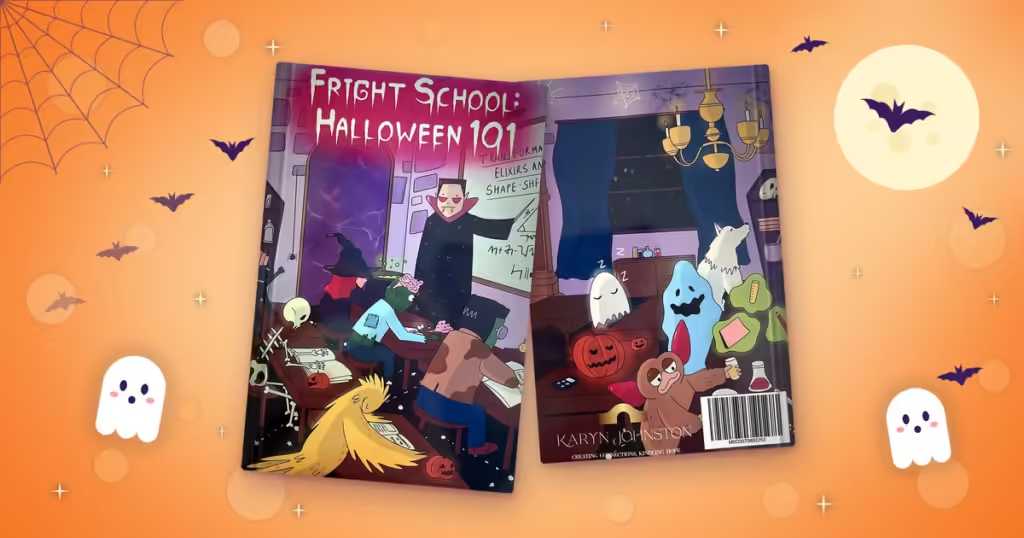
Every good guiser needs a joke or two! Our Halloween notebooks are packed with silly Halloween jokes and fun facts, and they come with a flipbook animation that springs to life when you flick the pages. Each one has 140 pages with Halloween-coloured lines, so there’s plenty of room for stories, doodles and notes from your trip around the world. They make a unique Halloween gift for kids (and grown-ups who love Halloween), a fun boo basket filler or a sweet-free treat for class parties.
Find our Halloween notebooks on Amazon UK or Amazon US.
ChangeTheWorldWithKaryn makes free educational videos and printable resources for young children. Learn with Karyn creates curriculum-aligned videos and worksheets for ages 5 to 7, and our sister channel, Storytime with Karyn, brings children’s books to life through gentle, low-stimulation read-alouds with free reading comprehension worksheets. Visit changetheworldwithkaryn.com for all of our free resources.